
This post is about my experience shopping at a grocery store. It is such a mundane and predictable experience that rarely receives the observation and reflection it deserves.
But before diving into grocery shopping theory, let’s step back. I want to appreciate how fundamentally overlooked grocery stores are today. Fortune has blessed me to live in a time and place of such magnificent convenience. I could make a realistic argument that the grocery store, and all related forms it takes, is the most crucial structural building in our modern society. What happens if our grocery stores disappear? If our homes disappear, we are homeless, and we hopefully figure out a way to survive. Brutal, no doubt. With no hospitals, a lot of people would die; medicine is fantastic. But if there were suddenly no grocery stores, I imagine absolute anarchy. All in the name of food.
Food is one of the three non-negotiable biological imperatives for human survival—air, water, and food. We lucked out with Earth/Terra/Tierra; for now, our air is good to go. Our relationship with water is getting more complicated daily as societies creep treacherously towards more frequent water crises. But our food system, as unjust and unbalanced as it is on a global macro scale, is incredible. It is wild that people in the U.S. have access to virtually any food they want within a short time of travel. This level of food abundance and access is a novel way for humans to live when we consider the evolution of humanity. As a species, we are not accustomed to this convenience and luxury. Yet I take it so for granted—every single day. I have the food I want just a few blocks away waiting in an industrial refrigerated box. I don’t want to get into the whole food industry because many people have researched and written about its complex nature who are far brighter and more educated than me. I just want to highlight how unique and incredible grocery stores are, yet they rarely garner discussion. What would I do if I suddenly did not have access to food?
What I really want to discuss is my experience at the grocery store. Primarily, it raises questions about how we interact with others and conduct our personal affairs in public. Let’s begin where everyone does when they get to the grocery store. Parking. Oh my, did I decide to show up at 5:00 pm on a Sunday? Good luck. In that situation, I am the type of person who will find a parking spot in the back quickly and take it. It is faster to park and walk than to weave endlessly through lanes, searching for the perfect spot. Generally, what I will call “sexy spot seeking” drives me insane, and if you are driving in the car with me, I will let you know. But maybe there is a time and place for this behavior. What if it is a -20o gusting day in Minnesota where the roads are icy and every step is a risky calculated placement of my boot? What if I am also a mother who has to get my toddler out of the car and traverse the bustling icy tundra before finding the sanctuary of warmth inside Cub Foods’ automatic sliding doors? In that case, I can understand why someone wants to park closer. I don’t know where I draw the line in my mind filled with ambiguous rules, but generally, I will say: just walk.
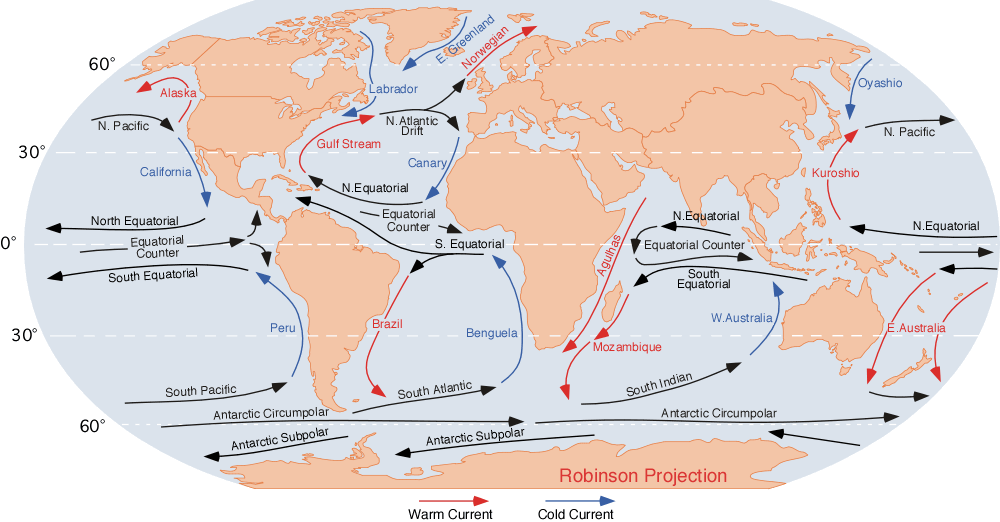
Once inside, I am confronted with a decision. Where do I go? But that decision is not real. Unless I come to the grocery store with an exact singular item and am aware of that item’s precise location, then there is no decision. The direction of where to go has already been chosen for me in the forbidden and mysterious “employees-only” back room by a manager who designed the grocery store’s layout. So, I follow the flow of the grocery cart pushing traffic around me. Like a school of fish, we navigate our carts in the same direction as everyone else as we start in what typically seems to be the produce section. While people dart in and out of the flowing school of fish to grab an item here or there, they quickly return to the current of rolling carts. Each grocery store offers a unique current that all carts should travel. The East Trader Joe’s Current (“Duuuuddddeeeeeee“). Aldi’s Circumpolar Current (ACC: the largest current in the world). The Gulf Whole Foods Stream.

Every Grocery Store Current (GSC) has a different aisle flow, food group organization, and overall aura. When and in what order do we explore rows of clearly labeled food groups? Are there circular bakery displays that pull us in like Calypso’s vortex? Where are the fridged or frozen items? What kind of faint music plays in the store’s background as we drift along the current? As I travel along a GSC, I become more familiar with its energetic flow. With disdain and contempt, I encounter the erroneous behavior of a grocery cart rolling against the current. One shopper’s selfish attitude and forgetfulness can introduce chaos and disorder, forcing everyone to veer slightly off course to accommodate the antagonistic intrusion to the GSC.
I do find a certain rhythm when I am in a grocery store that I know well. I know where to turn. I know what aisles I can skip. I can drift around a corner, grab what I need on a shelf, and with a subtle contraction of my back muscles and asymmetric pull of my cart, I can simultaneously reverse and turn my cart 90 degrees in a deftly executed maneuver. And I am right back along the GSC. There are skills involved in efficient grocery store shopping. How quickly and efficiently can I execute the tasks I have delineated and prepared for back in my kitchen? Back home, I compile my shopping list and visualize grabbing each item off the shelf, envisioning my success with every item added purposefully to my cart. And now I am in the store. It is time to perform. Do not be fooled; there is an audience.
When I am in the grocery store, I want to be in complete command of my intentions. When I see people confused and hesitant, I know they are hopelessly lost along the GSC. Struggling through the same aisles repeatedly in an Einsteinian pursuit of insanity. They stare up, looking to the aisle labels – or perhaps a divine power – searching for guidance as their sought-after goods remain elusive. With a heavy heart, I wheel by these wandering souls, and the GSC sweeps me onward in my journey, finding comfort in my knowledge of what I seek.
Overall, GSC navigational technique is not the only thing mutually observed by all shoppers. In addition, though perhaps with more hidden glances, the contents of a shopper’s cart are examined by the others in the pack. Am I healthy? What do I eat? Frozen? Fresh? Family shopping? That’s a lot of soda. I do not mean to cast judgment; it is more out of curiosity. What insights can a person’s grocery cart tell about their life? Do they have kids? Do they have pets? Do they like to cook? Do they struggle to find the time to cook? Are they starting a new diet? Do we like the same ice cream? Maybe I am just a little crazy and should mind my own business. But people-watching at the grocery store is interesting. People are in their authentic, raw forms at the grocery store. Tired from work, emotionally drained, happy from a good day, wearing their sweatpants, they are who they are. They are humans on a quest for sustenance to live a little longer.
As the mighty GSC propels me to its termination, a new interactive invention awaits. The self-service checkout line. The bane of my existence. I am terrible at self-service checkout. I do not know why I always seem to have something go wrong. I mis-scan. I select the wrong fruit. I attempt to purchase items that apparently do not exist in the store. When an error message pops up on the screen, I try to resolve it myself and further exacerbate the issue. When I check out electronically in a store in a language I do not understand, I click on anything resembling a credit card symbol before swiping my card and praying for any green pop display to appear to symbolize my successful purchase. With most of these failures, I pause and shamefully raise my hand as I look over my shoulders for an attendant to help. I feel like a clueless child playing with a new toy for the first time. One grocery store I shop at frequently only has four kiosks. It is a big store. This is high-stakes, self-service checkout. Whenever I have an issue, the last thing I want to do is look back into the line and make eye contact with other people. I can only imagine the thoughts running through their head as they watch me fumble and monkey thumb what should be an easy-to-use machine—stealing precious minutes out of their day when they all want to get home and relax.
And then the bags. I always seem to forget to bring my own, so I must shamefully add more plastic bags to the bottom cupboard in my kitchen. I tell myself they will get used someday. Opening the plastic bags requires a questionable sanitary endeavor of licking my fingers before separating the plastic bag. Before I learned this trick, I would use more uncivilized tactics. I would try to rub the closed opening of the bag between my dry thumb and fingertips faster and faster like a maniac. I would try to pinch the micrometer of plastic and pull it apart perfectly. Neither tactic worked well. This is a long-winded way of saying I hate self-service checkout lines, and they cause anxiety and fear every time I am forced to use one.
However, there is another interesting social phenomenon at this grocery store. Apart from the four kiosks dedicated to self-service, there are typically a few old-fashioned human-to-human checkout counters. When I started shopping there, I happily wheeled my cart past the doomsday checkout machines and rolled right into a human checkout lane. On the back wall behind the checkout area, there are typically around five elderly folks milling about and chatting in their blue vests. As the cashier started swiping my products through the scanner, one of these older women in a vest came up and started bagging my products. “Very nice,” I thought and said my thank you’s. But when I left the store, I saw the back of their vests, which said “Baggers work for tips only.” I did not know that or have any cash, so I didn’t tip and felt slightly bad about it.
The next time I rolled through the GSC with a full cart, I came prepared. When the older woman came up to help me bag my food, I told her I could do it, no stress. She just smiled and kept working. Confused, I accepted that she just really wanted to get my food in bags. Again, I did not tip because I did not want to pay for that service. That felt fair enough to me. But it was still an awkward interaction, and I did not feel great as I left the store.
So, whenever I returned to the grocery store, parked expertly, shopped efficiently, and eventually made my way to the checkout area, I now had a decision. I rarely thought it through beforehand. I could either face off against the ever-difficult self-service machines or confront another awkward social interaction with the baggers I did not want to tip. More often than not, I typically chose to toil through the self-service line where I eventually got better and smoother with my scanning.
Yet the more I went to the grocery store, the more I started to pick up on a tendency amongst all the shoppers. Even on the busiest days, when the checkout lines were long and people were waiting 5-10 minutes in the self-service line, the human-to-human cashier line was always much shorter, if not empty. Despite the convenience and time-saving opportunities in the human-to-human lines, the GSC dropped people off more frequently at the self-service checkout line. Was everyone processing a decision matrix similar to mine? Did they not want to tip? Did they not want to say no to tipping? Did they not want the social interaction and prefer to handle their business themselves? Were a few minutes of their time worth the wait if it meant not facing the persistent baggers?
And then I started thinking about the baggers in their blue vests, all appearing to be at least sixty years old. Why were they working here? Do they need the money from these tips? Are we depriving them of necessary money by congregating in the self-service line? Why doesn’t the grocery store just pay them? Are they just here for fun? Is this a hobby with their friends where they get out, move around, work, and make a little extra cash? Why can’t I just tip them? Is wasting 5-10 minutes worth not giving them a dollar in a situation where everyone is happier? Am I failing to find an opportunity to be kind in the name of a vain, superficial justification of morals I don’t really care about?
I do not know the exact answer. At the very least, I am more consistently attempting to find an awareness of my decisions along the GSC. The grocery store can represent a microcosm of human’s dependency on convenient food, complex spatial and systemic efficiency, and our behavioral patterns and decisions relative to our surrounding community. Perhaps most interestingly, all these things are present and affecting my actions, but they rarely register as significant thoughts in my ever-busy consciousness. Is it always the best course to stick with the current?
I walk out of the grocery store and return my cart to its corral slant pun?, safe from the turbulent GSC (if you don’t do this, you’re an asshole, not much room for argument there). I look up to remember where I parked. Tuck my hood over my head and start the long, cold walk back to my car.


 Douglas Thoughts
Leave a reply to Beth Voneschen Cancel reply